
Why We Are Building ChessZCam: From Chess Videos to the Tournament Hall
ChessZCam did not begin with a camera model, an AI diagram, or a plan to compete with established chess technology. It began with two children, the creators whose videos opened a door for them, and a parent who wanted more people to experience the quiet magic of real tournament chess.

Update — 24 September 2026. This story was written in July 2026, two days after zonChess.com opened on World Chess Day. The reasons behind ChessZCam have not changed; what has changed is how far the tool has come, so a few details below have been brought up to date:
- Who builds it. ChessZCam is built by one independent developer and chess parent at Motivace Studio in Malaysia — no company, no investor and no sponsor. The developer note says more.
- Four tournament tests so far. KawanCatur 1st Edition Tournament (5 July), Saiful Arena Chess Tournament @ Taiping Mall (18 July), SJKC Keong Hoe in Penang (26 July) and Lotus's Kulim (19 September 2026), each feeding the next build.
- From detector to studio. Six operations — Record Game Video, Analyze Video, Detect Live Game, Broadcast Live, Sync PGN to Video and Open Project — plus review & repair, optional on-device Stockfish and overlay video export up to 4K, on the phone and in ChessZCam Studio for Windows.
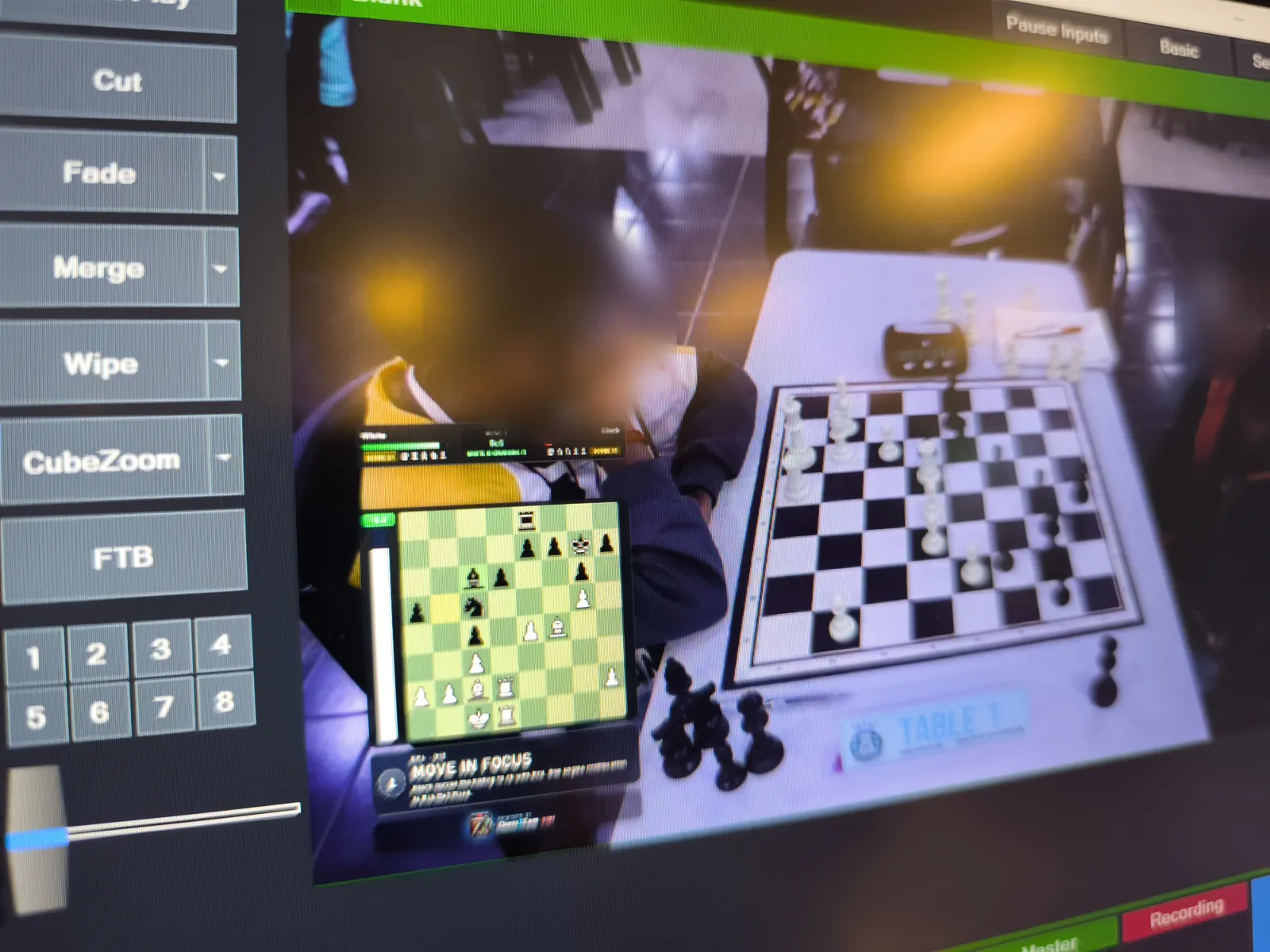
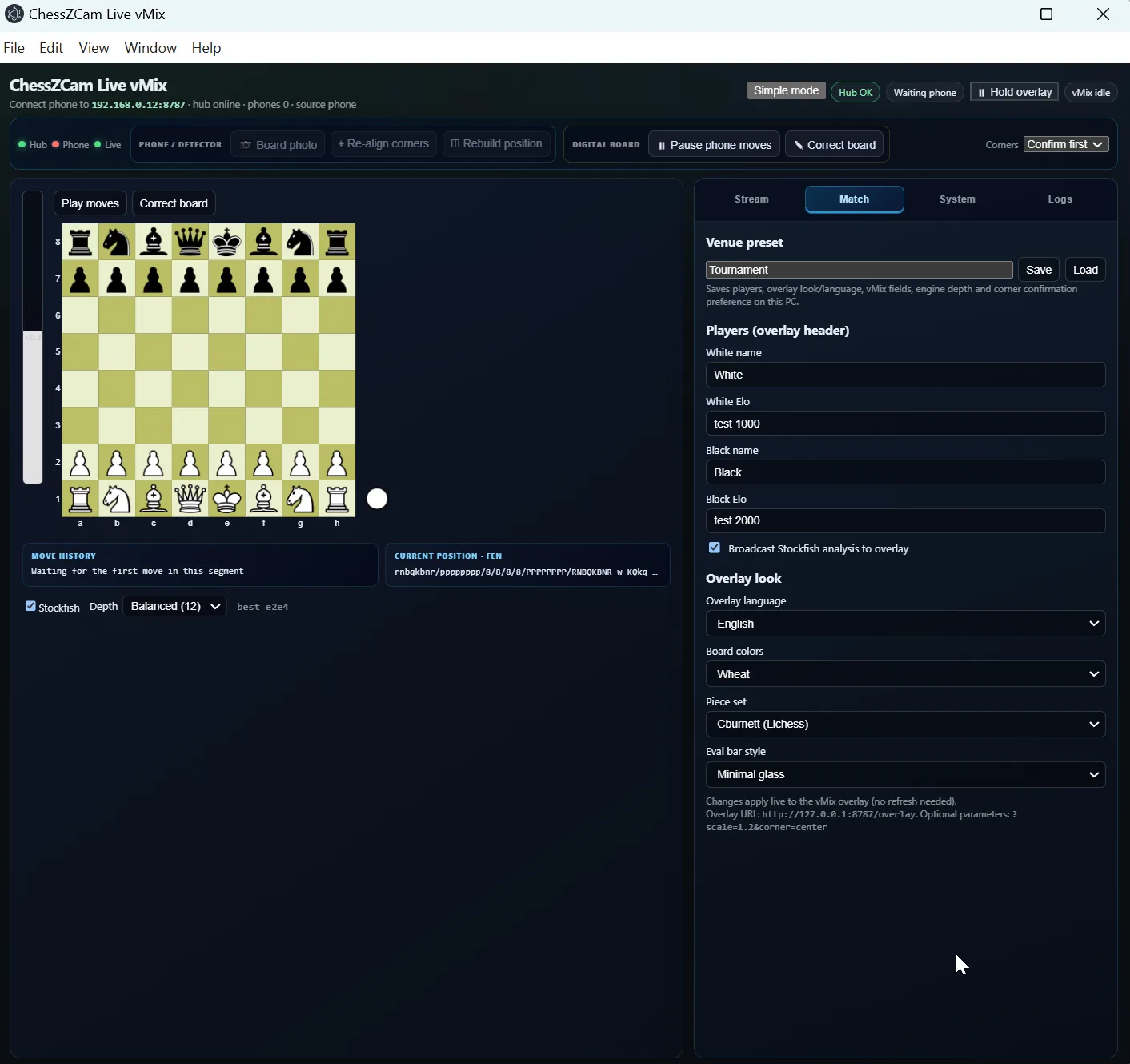
- The PC controller has grown up. The Windows controller that chapter 06 showed “in beta” in July is now ChessZCam Live (for vMix & OBS), with a Tally-style console and an Overlay Designer.
- A second tool. The same tournament weekends produced SwissMax, a companion that works beside Swiss-Manager — Swiss-Manager and the arbiter keep authority.
- Photos. Pictures of young players on this page have been replaced with versions where faces are blurred.
On 24 September the builds were Phone 1.15, Studio 0.20 and Live 1.6; today Studio 1.1.4 is the trial candidate, with Phone app 1.22 and Live 1.12 behind it — all pre-release builds. Studio comes first with a free 14-day trial; package prices are on the ChessZCam page, and waitlist members get 50% off their first package. Trial invitations go to the waitlist first. See the dated project journey.
The journey behind ChessZCam
- Chess videos — ideas become understandable.
- Curiosity — children want to try.
- Real tournaments — people meet face to face.
- Hidden creator work — OTB footage is rebuilt by hand.
- ChessZCam — a practical digital bridge.
Chapter 01 · The first doorway
Before the tournament hall, there were chess videos
Like many children today, the developer's two children first met chess through a screen. A creator explained a tactic. Another replayed a dramatic tournament game. Someone made a difficult idea feel simple enough to try.
Those videos did more than teach moves. They created curiosity. Curiosity became practice, practice became courage, and eventually the children wanted to sit across from a real opponent in a real hall.
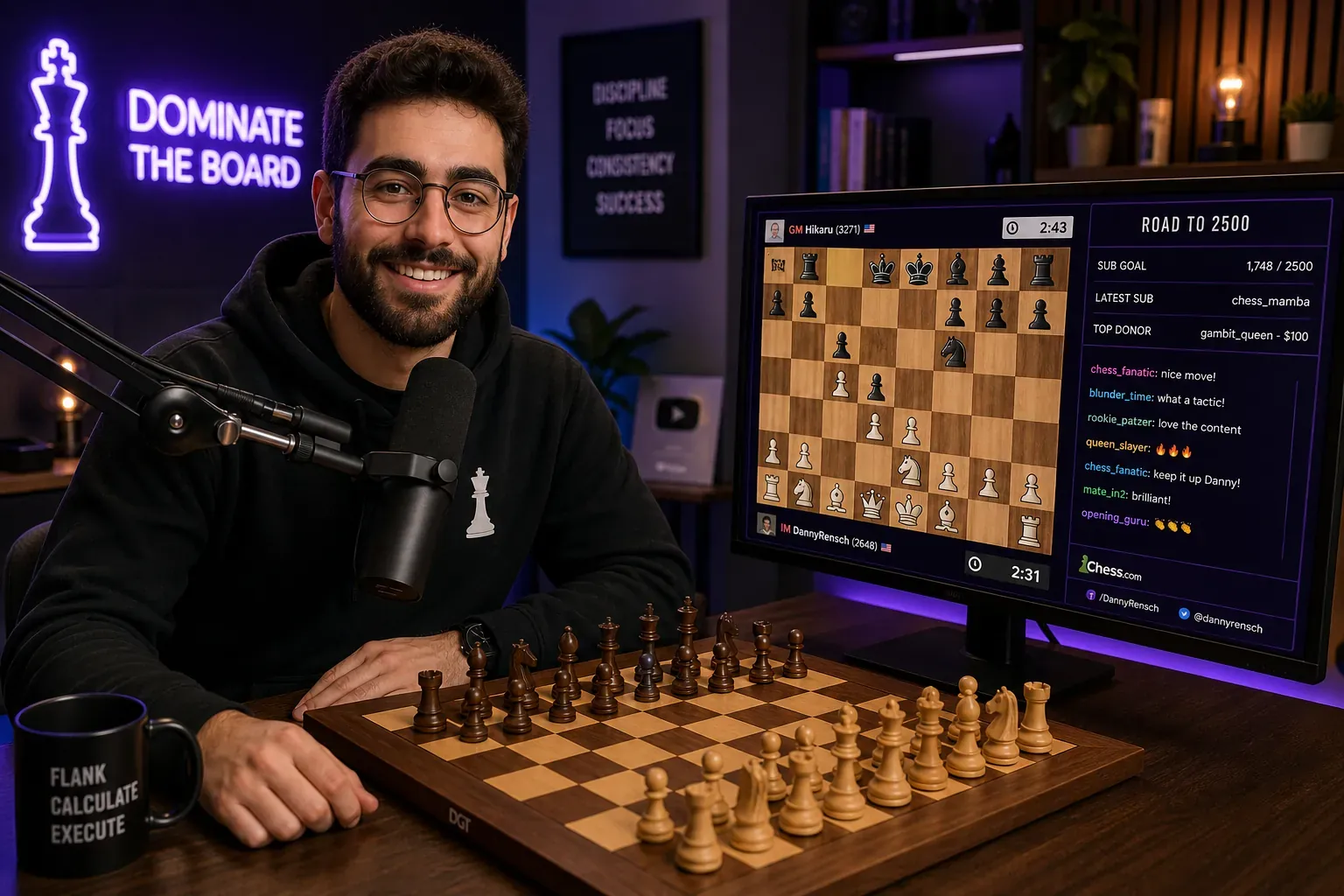
A good chess video can be the bridge between “I have seen this game” and “I want to become part of this community.”
The project therefore begins with gratitude. Chess creators are not a side audience for ChessZCam. They are part of the reason it exists.
Chapter 02 · What the screen cannot replace
The human magic of over-the-board chess
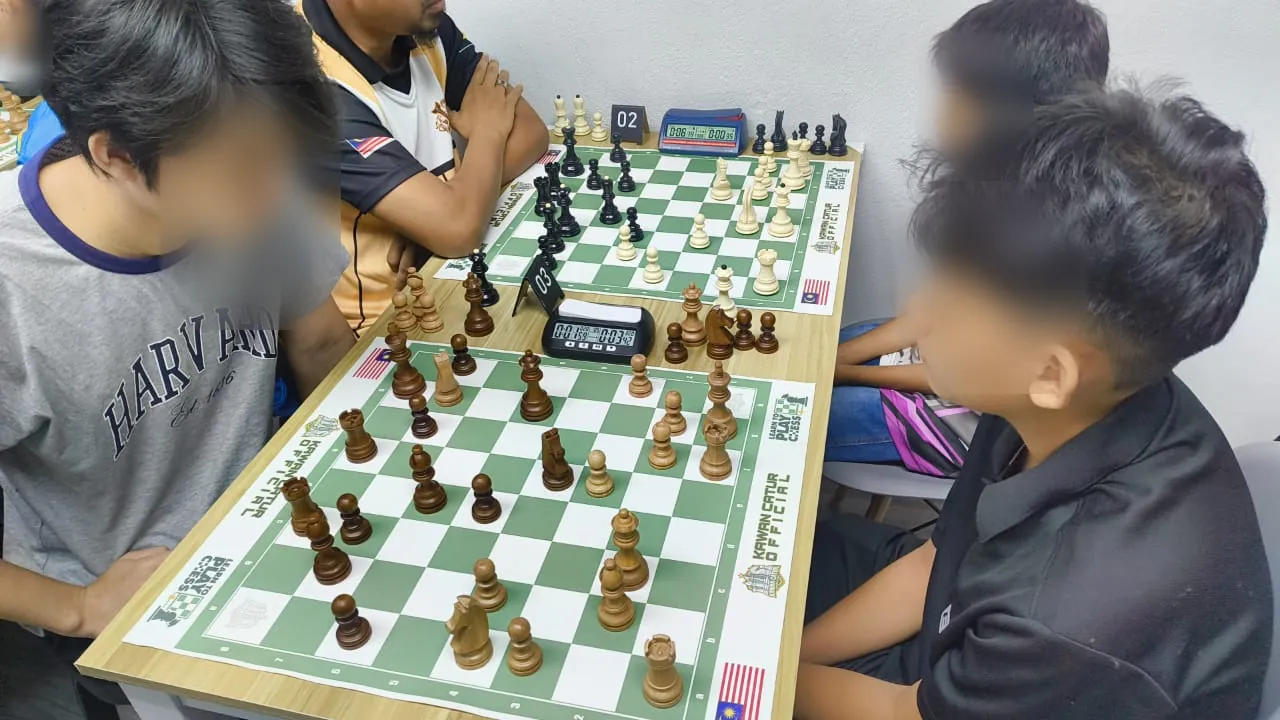
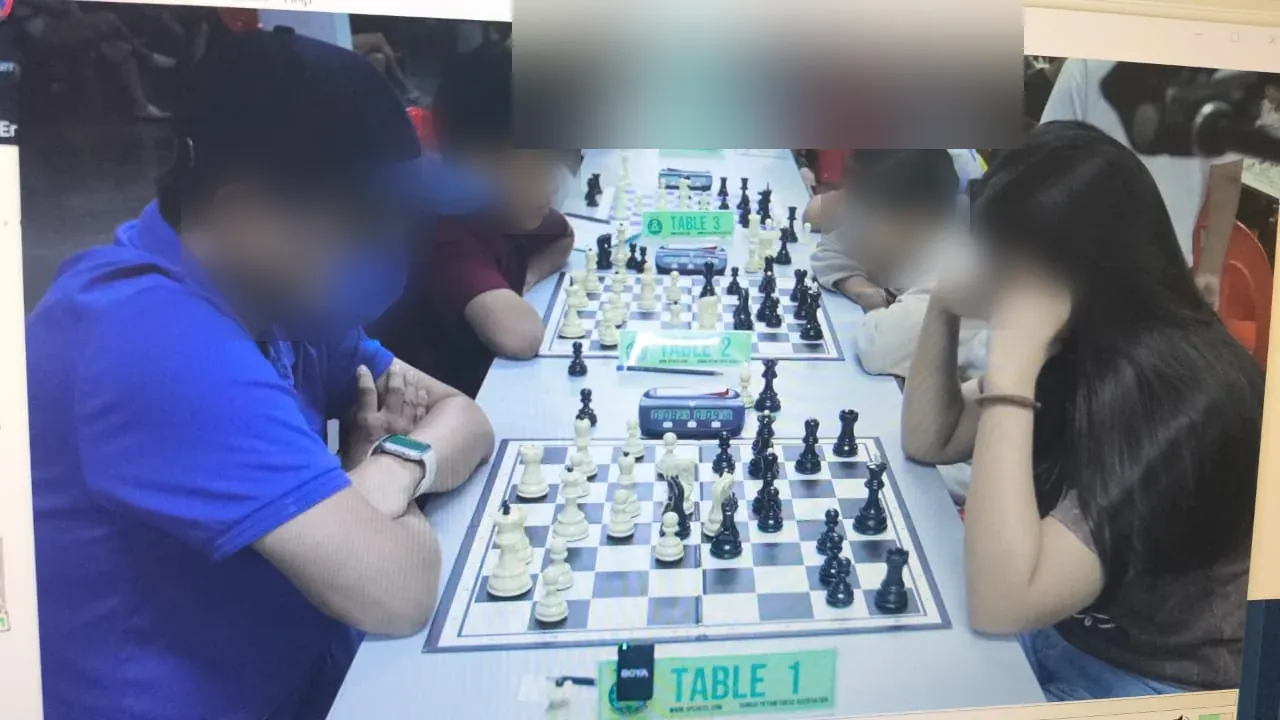
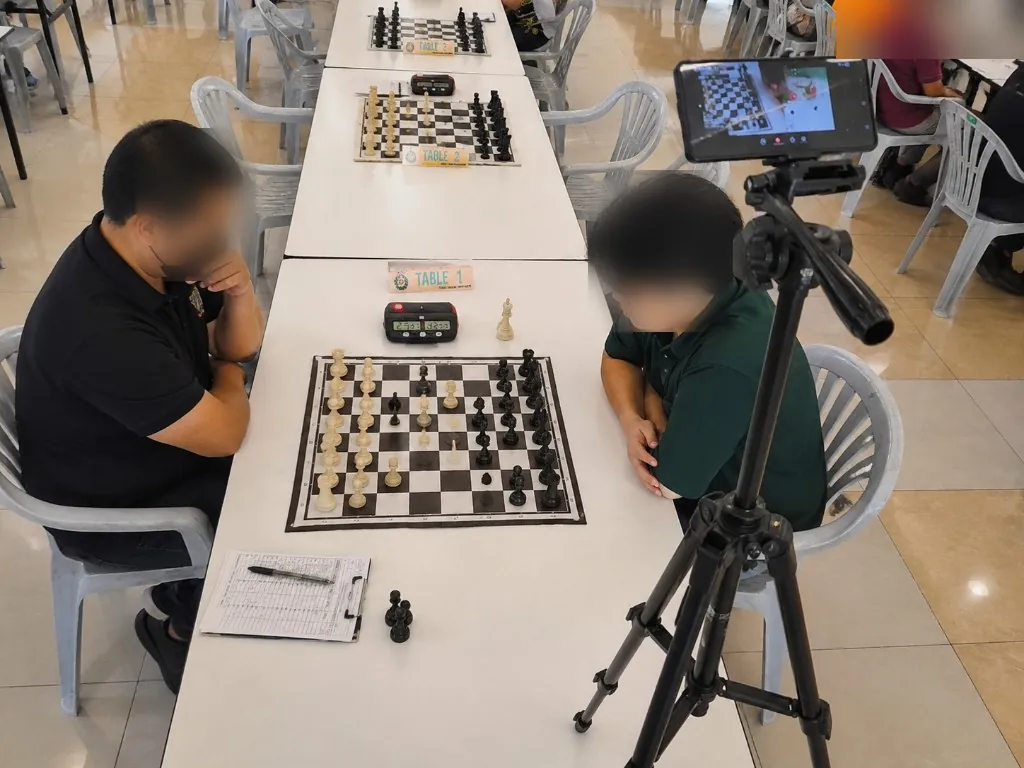
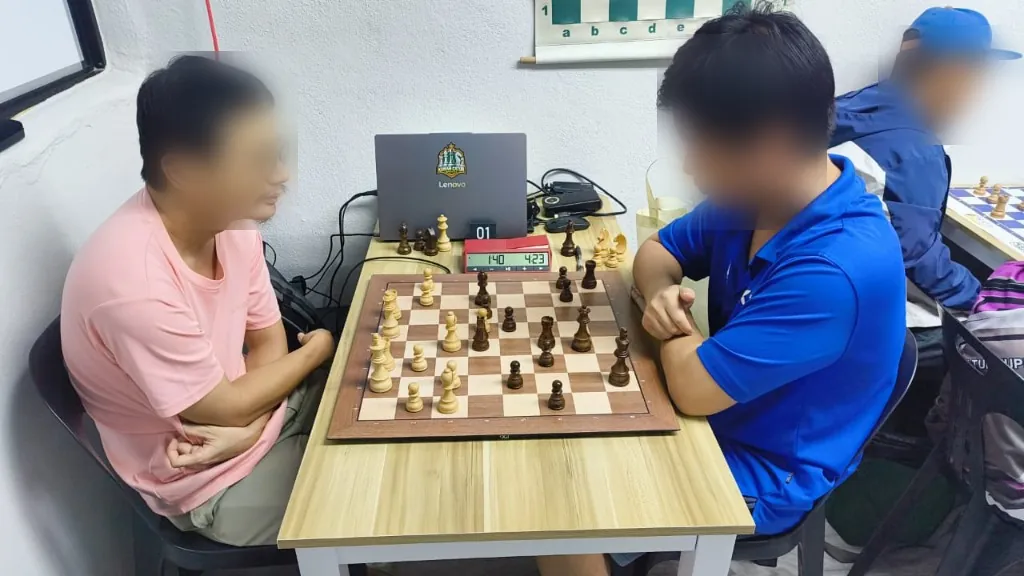
Real tournaments in Malaysia. Young players' faces are blurred on this site.
Online chess is fast, accessible, and extremely valuable. Yet an OTB tournament teaches a different set of lessons. A child learns to arrive on time, sit through discomfort, shake hands, respect silence, recover after a loss, and meet people beyond the limits of an algorithm.
The board becomes a meeting place. Parents exchange stories. Organisers solve problems together. Stronger players help beginners. Rivalry can exist without hostility, and a difficult game can become the beginning of a friendship.
In a time when many of us are trapped inside virtual interaction, these small human encounters matter. Technology should help more people discover them — not make the physical community unnecessary.
Chapter 03 · The invisible work
Behind every clear analysis video is a lot of manual labour
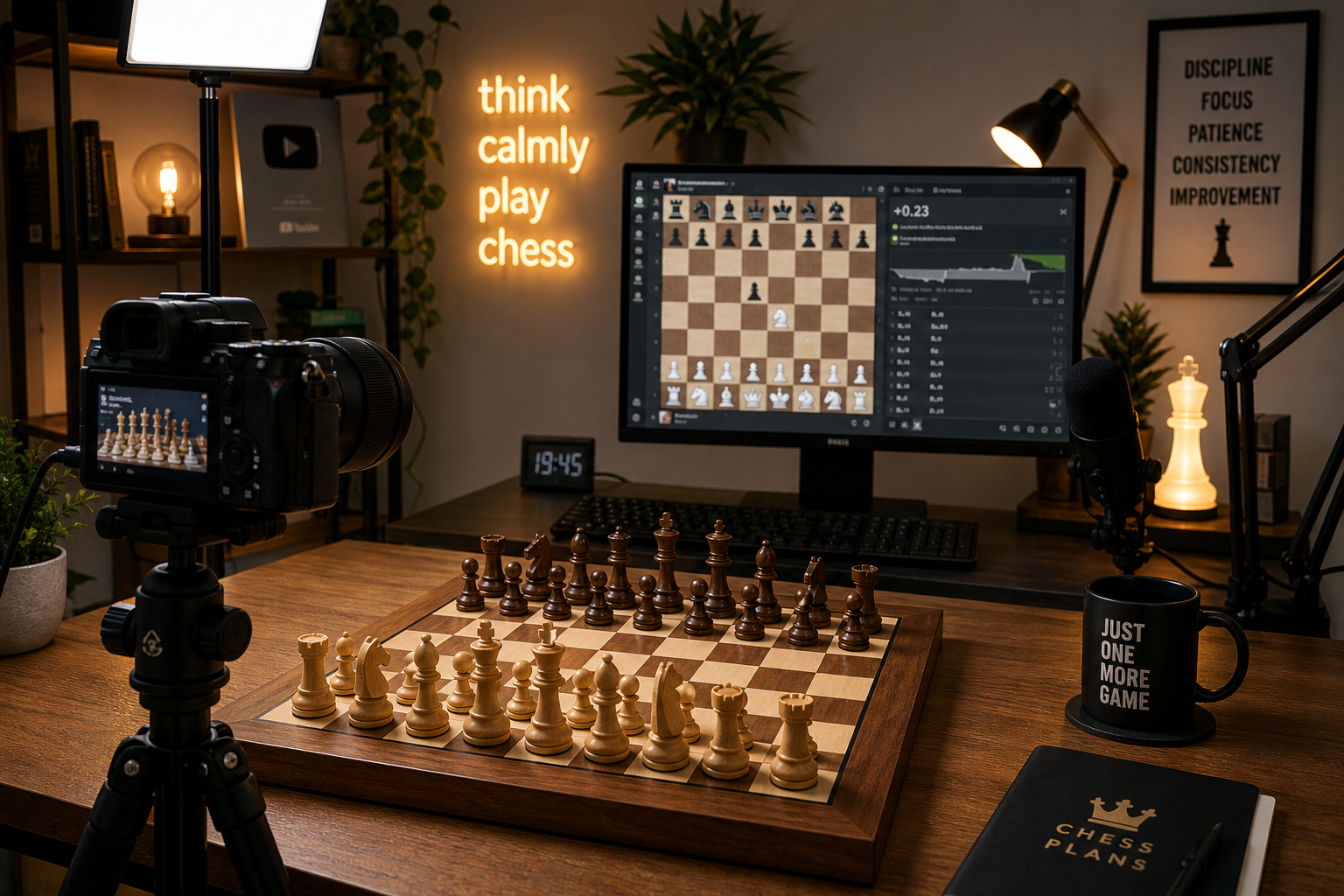
When viewers watch an OTB analysis video, the digital board often looks effortless. The hidden work is not.
What viewers see
- A clean digital board, clear analysis and a story that seems to flow naturally.
What creators often do
- Rewind, identify, rebuild, verify, correct, annotate — then finally begin the creative part.
A typical manual workflow looks like this:
- Watch the footage again.
- Identify every move.
- Rebuild the game digitally.
- Correct notation errors.
- Add analysis and graphics.
- Edit the final story.
A single unclear move can force the creator to rewind repeatedly. A missing scoresheet may require reconstructing the position from video. The most valuable part — the explanation, emotion and storytelling — often comes only after the repetitive work is complete.
Chapter 04 · The question
Could the physical board become digital while the game is happening?
Several workflows were tested to shorten that process. The deeper question gradually became clear:
Can a normal chess set, a phone camera and practical software create a useful digital record — without requiring every family or small organiser to begin with premium hardware?
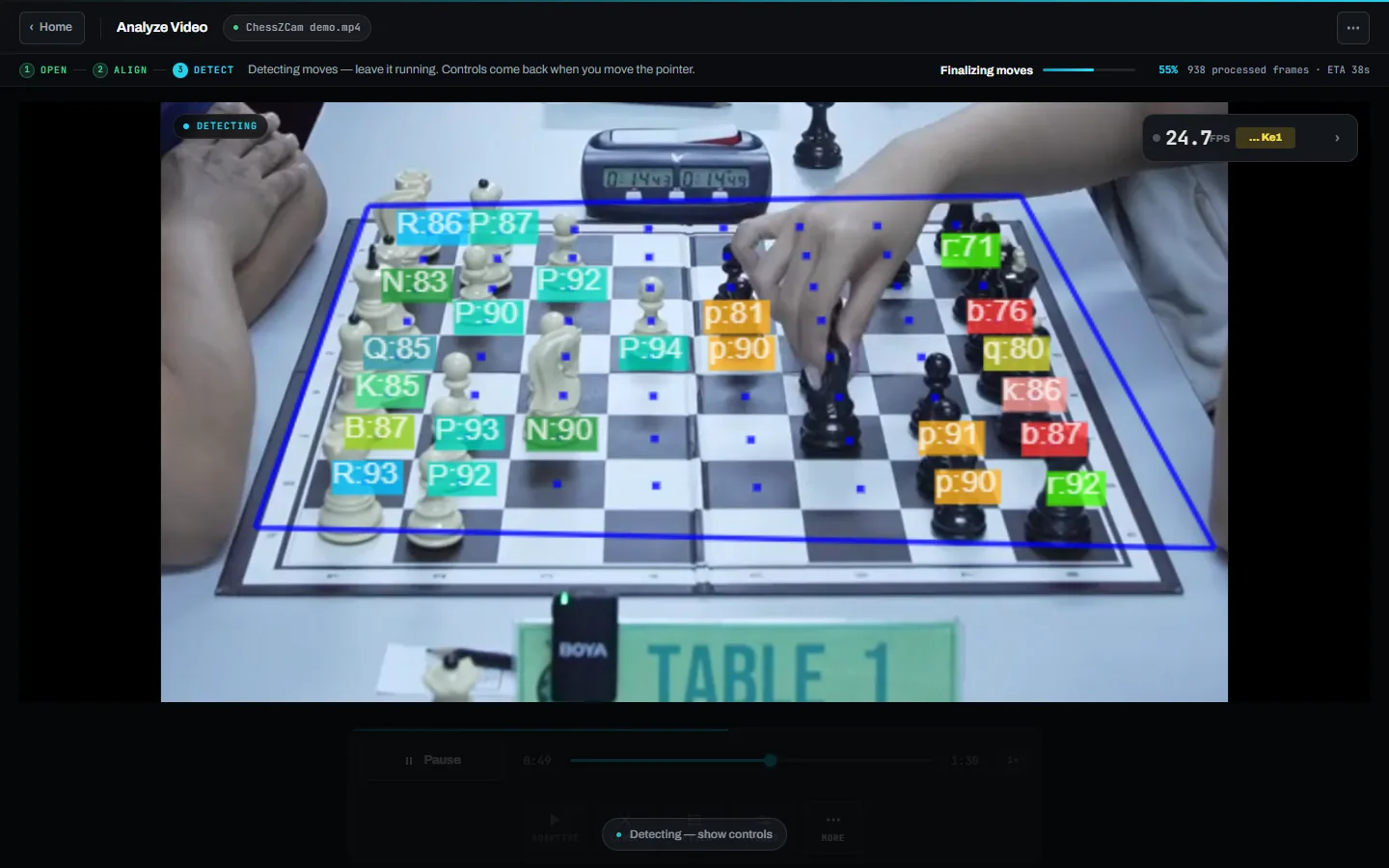
That question became ChessZCam: an attempt to detect moves from a physical board, maintain a digital position, record PGN and provide an overlay that can be used in OBS or vMix.
Since then, the answer has grown into one app with six operations. Detect Live Game turns the camera straight into a PGN while the game is played; Record Game Video keeps the whole game for later; Analyze Video reads the moves from a recording, with every move stored beside its video frame; Broadcast Live sends the board state to ChessZCam Live on a PC for vMix or OBS; Sync PGN to Video matches a PGN you already have to a recording; and Open Project continues a saved review.
Lighting, hand occlusion, tripod movement and device performance can affect detection. That is not theory: on 18 July at Taiping Mall a player accidentally touched the tripod, the framing shifted and the digital position drifted — and the hold, correct, sync and rebuild tools were built the very next day. ChessZCam is designed to reduce repetitive work while keeping correction and recovery tools close at hand, and its accuracy depends on the setup and on the quality of the video.
Chapter 05 · A bridge, not a battlefield
Accessible technology can complement professional systems
Electronic chess boards have made an enormous contribution to professional broadcasting and tournament operations. ChessZCam is not being built to erase that contribution or create hostility toward existing solutions.
ChessZCam focuses on the space between having no digital workflow at all and needing a full professional installation: a school event that wants one featured board, a parent recording a child's game, a local organiser with limited funds, or a creator who wants to turn OTB footage into analysis more quickly.
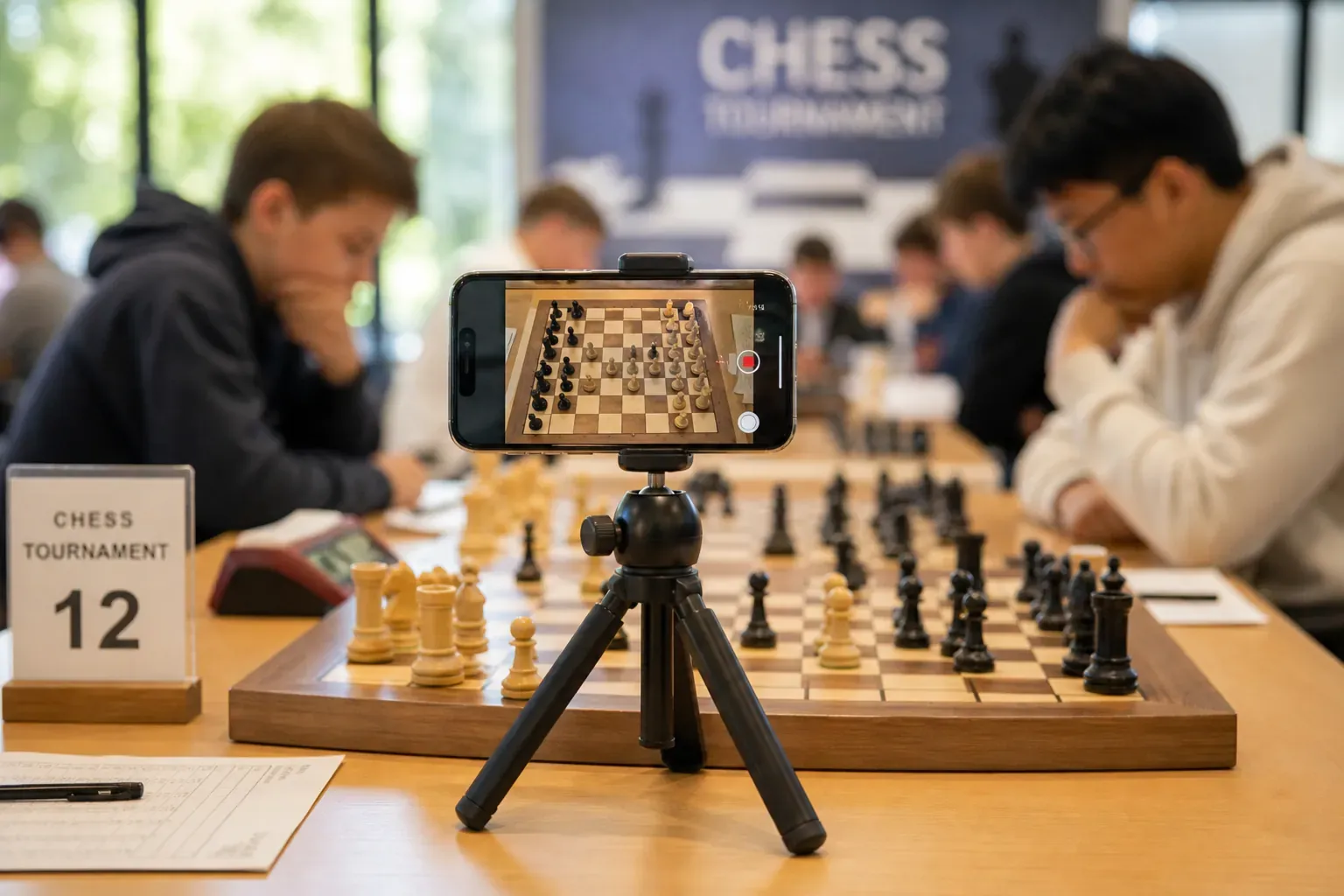
Dedicated hardware
Excellent for events that need dedicated hardware, proven integration and scaled operations.
A phone and a normal set
A lighter starting point for a family, creator, school, club or one featured tournament board.
Different approach. Same larger goal. Make chess easier to record, explain, share and enjoy — so that more people can find their way into the real community.
Chapter 06 · Development standard
Build trust through tested results and clear conditions
Product updates distinguish tested capabilities from work in progress, including the setup conditions that affect detection quality — today in the release notes, the roadmap and the known limitations.
Development follows a practical cycle: test in real venues, document failures, improve recovery tools and validate the workflow again. By September 2026 that cycle had run through four tournaments — two before this article first appeared, and two since:
KawanCatur
The first test turned a development desk into a checklist for every later test.
Taiping Mall
First live YouTube production; a nudged tripod led to the recovery tools.
SJKC Keong Hoe
Two games followed through the endgame to checkmate, in Penang.
Lotus's Kulim
Table 1 detected on the spot and sent live into a vMix production.
- Build around real tournament constraints, not only clean laboratory scenes.
- Keep manual correction available when automation is uncertain.
- Respect organisers, arbiters, players, parents and existing technology — ChessZCam records, reviews and broadcasts; it never settles a dispute at the board. That belongs to the arbiter.
- Make useful tools more reachable without pretending every tool fits every event.
Chapter 07 · Your place in the story
Build for the chess world that actually exists
Perhaps you are a creator who has spent hours rebuilding games. Perhaps you organise events with three volunteers and an unreliable internet connection. Perhaps you are a parent waiting outside the playing hall, wondering how the position is going.
Real experiences from creators, organisers and families provide the most useful product research. Share what takes too long, what goes wrong at venues, what should always remain under human control, and which feature would genuinely improve the workflow — in the comments below or on the feedback page. Every message reaches the developer directly.
ChessZCam is built with limited time and limited resources, so please do not expect perfection. What we can promise is honesty about what works and what does not work yet, and steady, visible improvement.
Related reading
A note from the developer
Built by a chess parent — not a company, and without a sponsor.
Read the note → BLOG · FOR CREATORSFrom OTB video to PGN
The hidden creator workflow from chapter 03, and how ChessZCam shortens it today.
Read the article → PROJECT JOURNEYBuilt at real tournaments
The dated record of every field test and what changed because of it.
See the journey → BLOGStaying in control of the board
What happens when the camera misses a move, and how the operator puts it right.
Read the article →Early trial
Follow the journey from the beginning
Join the waitlist for product updates, tournament test reports and the ChessZCam early trial — everyone on the waitlist receives it first, and 50% off their first ChessZCam package when sales open.
Join the conversation
What first drew you — or your children — into chess? Share the creator, tournament or community moment that opened the door.