
SwissMax · Real hall stories · Juniors

When pairing graphics look like a game screen
A child who finds their name on a clear board list doesn’t just “get information.” They get a tiny ceremony — and, ideally, they find Board 14 in about three seconds, not three anxious minutes.
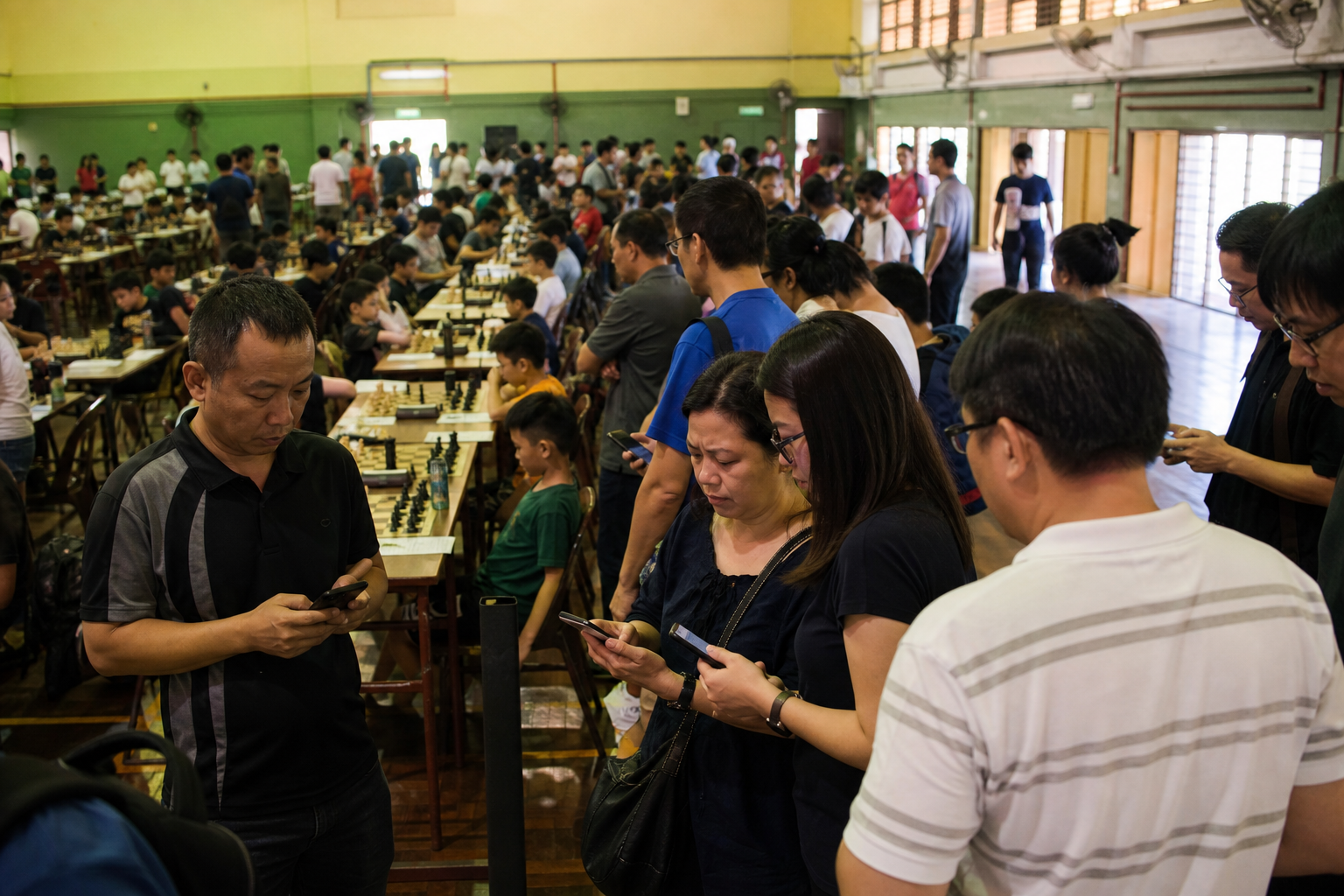
Scene one · the stampede
Everyone hammers the same page… at the same second
You know the moment. The venue is packed. Round pairings just dropped — or people think they dropped. Parents, players, coaches, aunties with power banks: everyone opens Chess-Results together. Refresh. Refresh. Refresh.
When a whole hall hits one website at once, pages crawl. Some phones show spinner yoga. Some show half a table. Some show… nothing useful at the exact minute people need a board number. Organizers feel that quiet panic: “The pairing is ready in Swiss-Manager… why can’t the hall see it cleanly?”
And if the venue internet hiccups? That panic gets a little louder. Time is gold on tournament day. Every minute spent waiting on a reload is a minute not spent settling kids, checking clocks, or simply breathing.
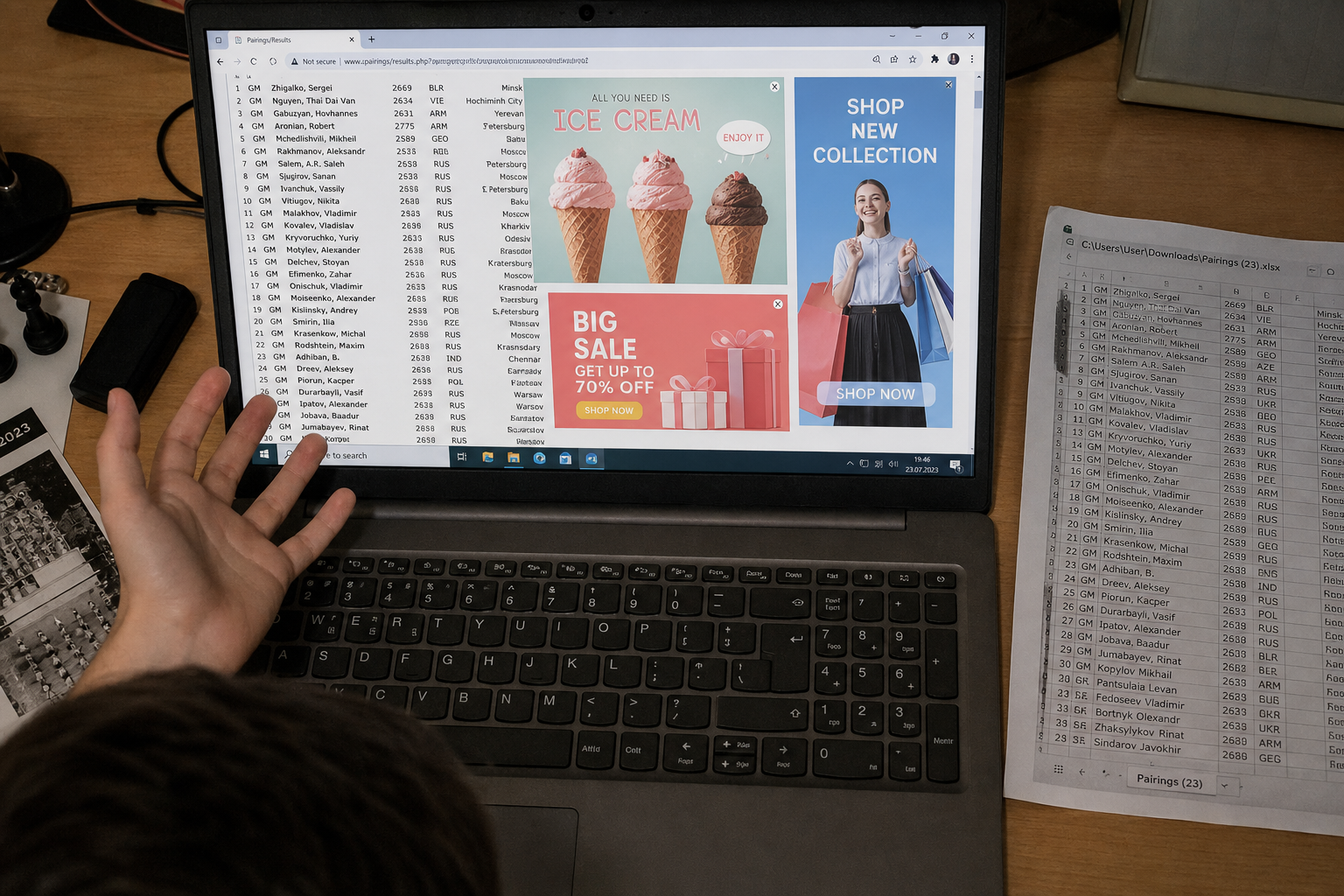
A familiar player-eye view: the pairing is somewhere under the noise. (Illustration — not an official Chess-Results screenshot.)
Scene two · concentration vs ice cream
When the popup becomes the main character
Let’s be honest as chess people, with a little smile: sometimes the pairing list is there… but a generous advertisement decides to sit on top of the names. Finding the tiny close button can feel like an endgame puzzle. Meanwhile a junior is asking, “Ayah, board berapa?”
And the brain — being a brain — drifts. Who’s the model in that ad? How much is that ice cream? If I somehow win cash today… maybe Baskin-Robbins? Wait — which board am I on?
Funny later. Not funny when Round 4 clocks are ticking and half the hall is still hunting names behind a banner. Distraction is not “weak discipline.” It’s human. Tournament communication should fight distraction, not add to it.
Why local graphics
Download. WhatsApp. Print. Show on the hall screen.
That’s a big reason SwissMax processes and renders locally on the organizer PC. Once the official pairing data is in hand, a clean graphic can be downloaded immediately — then sent on WhatsApp, printed for the wall, or shown on an LED / TV using the familiar manual route (laptop extended display / simple screen share).
Honest note: auto-push to venue screens is not in the current build. InsyaAllah that kind of “hall display” help is on the longer roadmap. For now we respect the traditional methods organizers already use — just with better pixels.
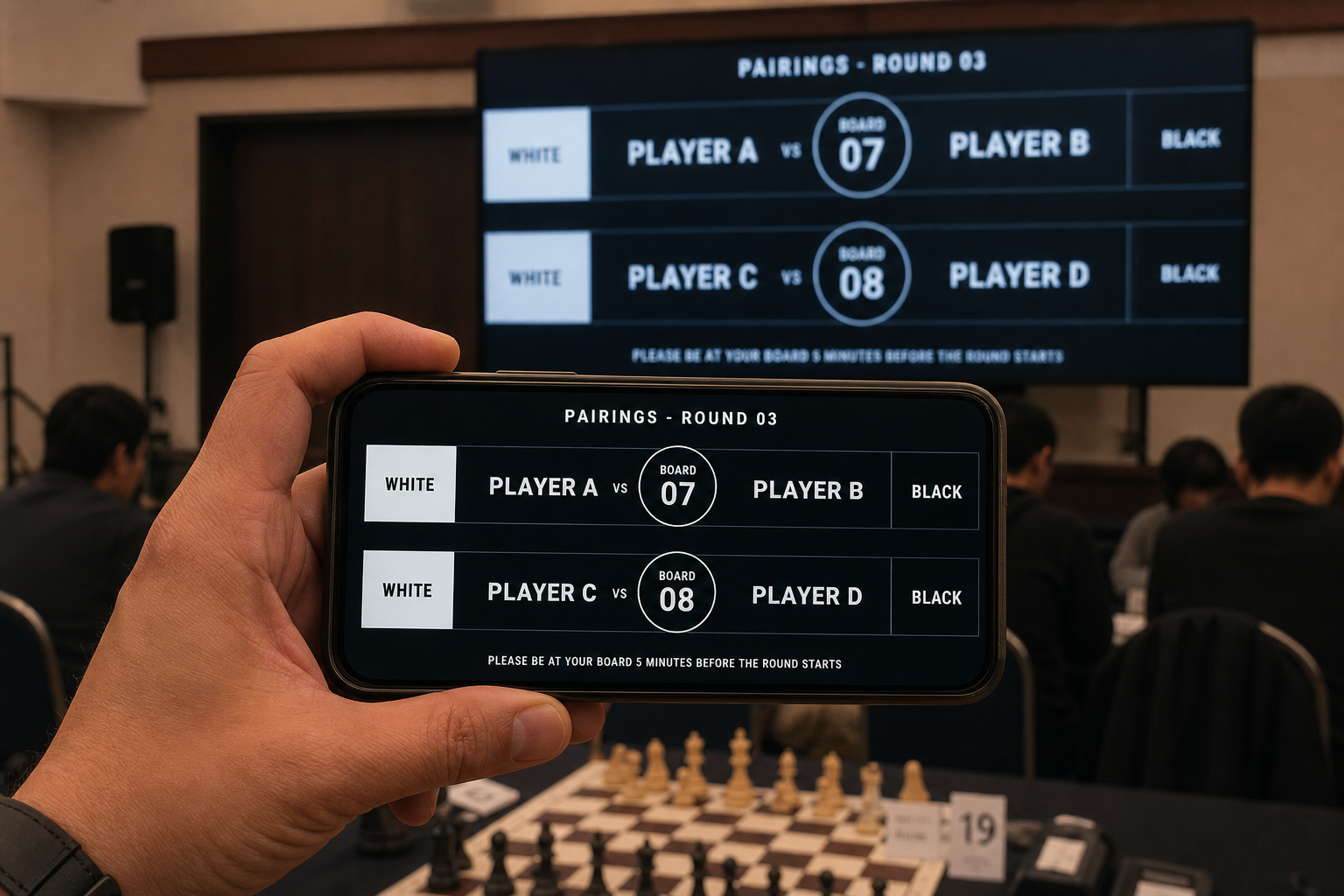
Same idea on a phone and on a hall display: board numbers you can actually point at.
Small design · big seconds
Why this beats “crop the Excel and pray”
Cropped spreadsheets and long plain lists can work. They also make eyes work overtime. SwissMax pairing graphics lean on details that look small on a feature list — and feel huge in a crowded aisle:
- Systematic name layout — White and Black separated so your eye doesn’t swim.
- Board number beside the match — not buried three columns away in microscopic type.
- Clear colour contrast — light vs dark sides, so “who has White?” is instant.
- Readable density — pages split so names don’t shrink into “guess the font.”
If a player finds their board 1 to 5 seconds faster, that sounds tiny. Across 80 boards, two sections, and five rounds, those seconds become calmer starts, fewer “where’s my table?” clusters, and more time for the experience organizers actually want to give — not another reload marathon that burns mobile data and patience.
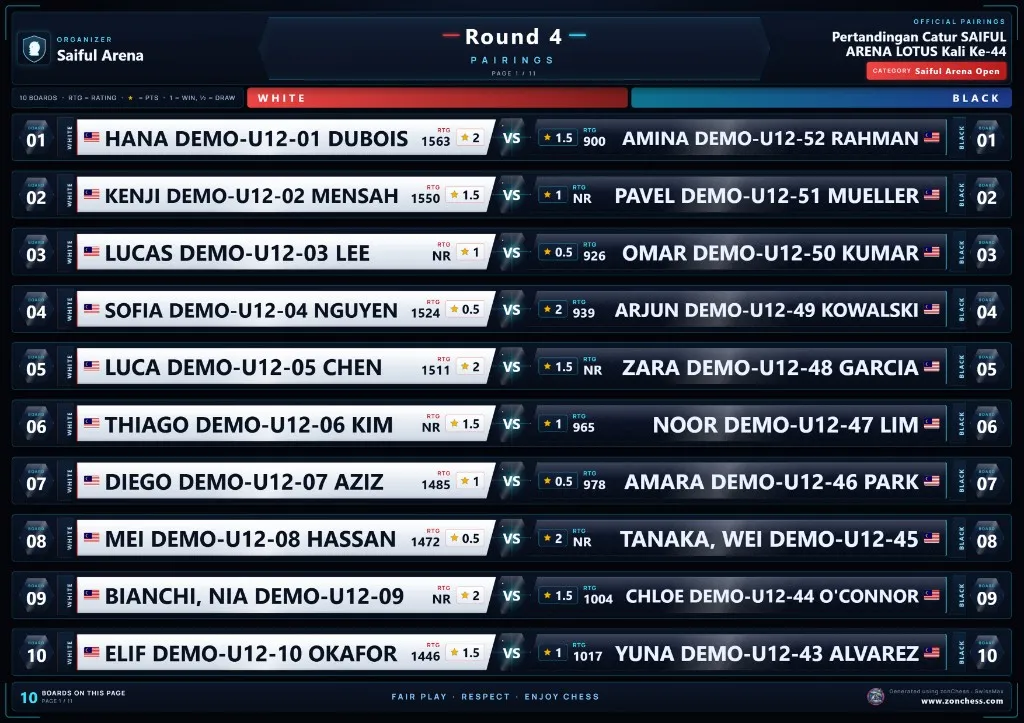
Sample SwissMax output · synthetic demo names · designed to scan like a scoreboard, not a spreadsheet crop.
Pride still matters
Speed for the hall. Sparkle for the heart.
Clear graphics aren’t only logistics. When a junior sees their name on something that looks a bit like a broadcast or a game lobby, they get a tiny ceremony: I belong here. Parents snap a photo. Friends cheer. That feeling helps chess compete with a hundred other weekend options.
So yes — our “solution” can look small from the outside. Underneath sits a longer thought: protect concentration, respect official pairing systems, save minutes that belong to players and organizers, and leave a little more room for joy.
Soft landing
SwissMax is the quiet helper in that story
Keep Swiss-Manager for the truth of the pairing. Keep Chess-Results for the wider world when the network behaves. And when the hall needs clarity now — local posters that are easy to share become a kindness with engineering behind it.