
When pairing graphics look like a game screen
A child who finds their name on a clear board list doesn't just get information. They get a tiny ceremony — and, ideally, they find Board 14 in about three seconds rather than three anxious minutes.
A friendly boundary first
Chess-Results is a vital publishing platform for the community and Swiss-Manager is the system of record. This article is about hall pressure and concentration — not a complaint about either. SwissMax does not replace Swiss-Manager or invent official pairings; it helps organizers share clearer local graphics from data they already trust.
Scene one: the stampede
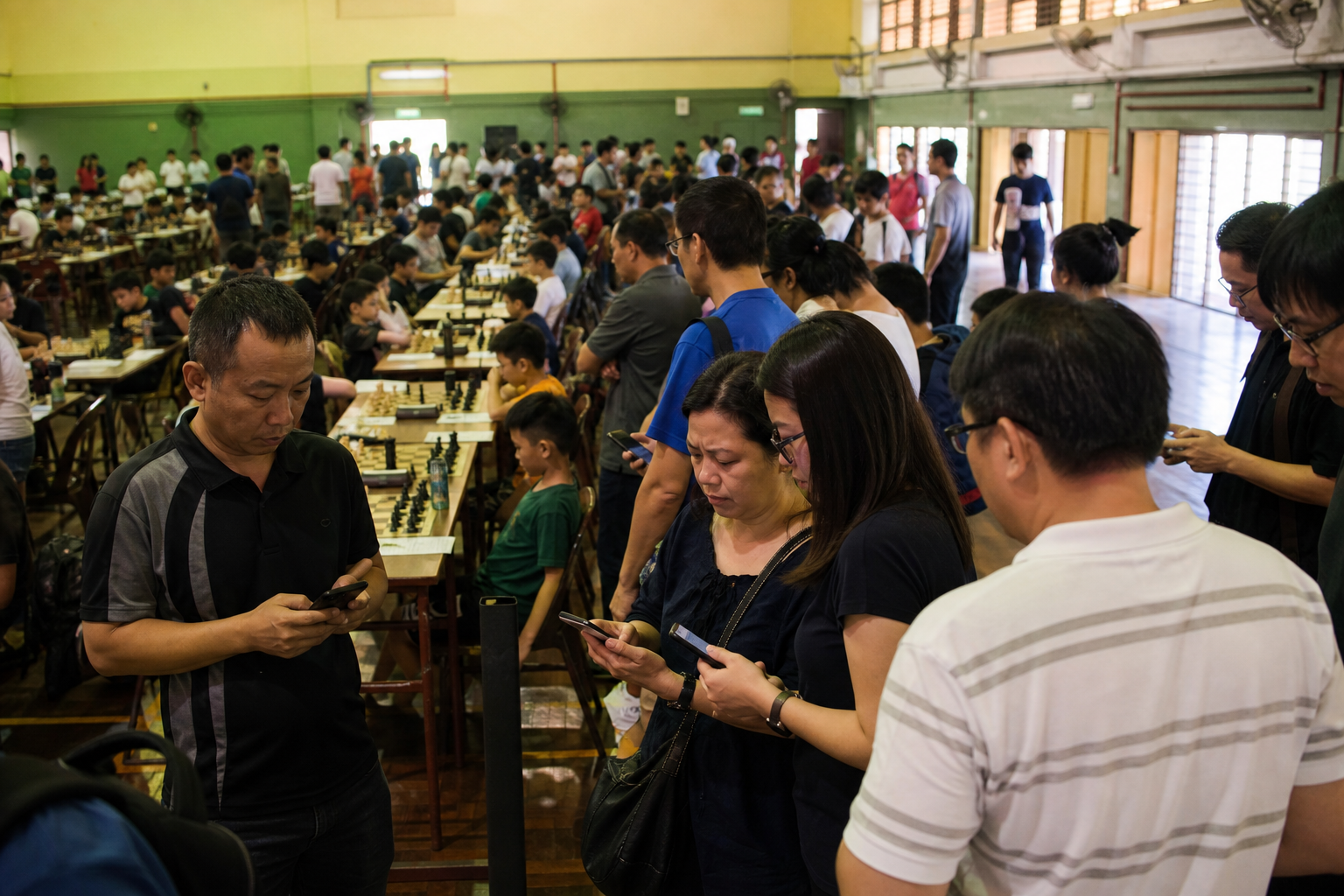
You know the moment. The venue is packed. Round pairings have just been published, and everyone opens the same page at the same second. Parents, players, coaches. Refresh. Refresh. Refresh.
When a whole hall hits one website simultaneously, pages crawl. Some phones show a spinner. Some show half a table. Some show nothing useful at the exact minute a person needs a board number. And if the venue internet hiccups, that quiet panic gets louder. Every minute spent waiting on a reload is a minute not spent settling children, checking clocks, or simply breathing.
Scene two: concentration versus everything else
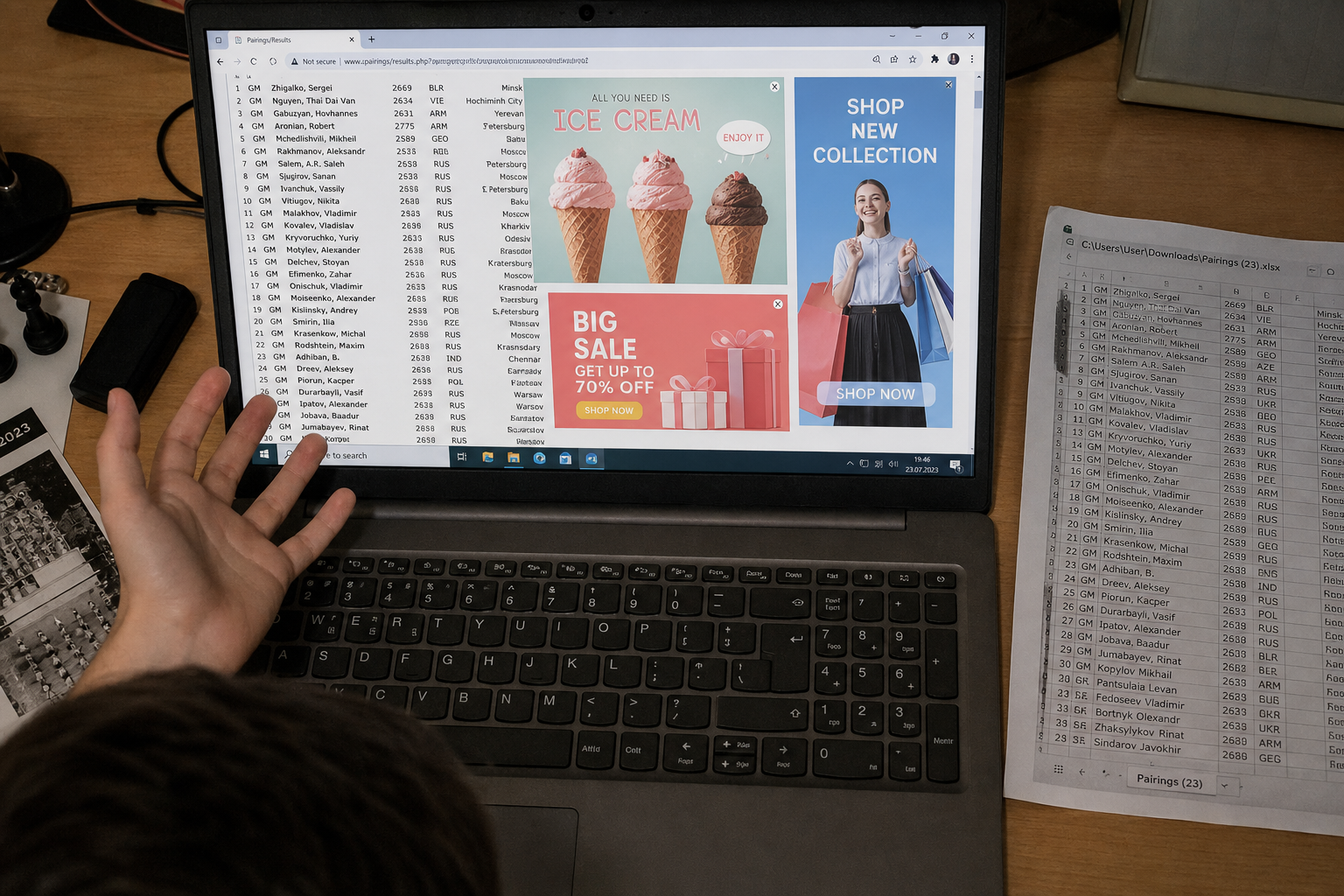
Sometimes the list loads, and something else decides to sit on top of the names. Finding the small close button becomes its own endgame puzzle while a junior asks which board they are on.
And the brain, being a brain, drifts. Funny afterwards. Not funny when Round 4 clocks are ticking and half the hall is still hunting for names. Distraction is not weak discipline — it is human. Tournament communication should fight distraction, not contribute to it.
Why local graphics
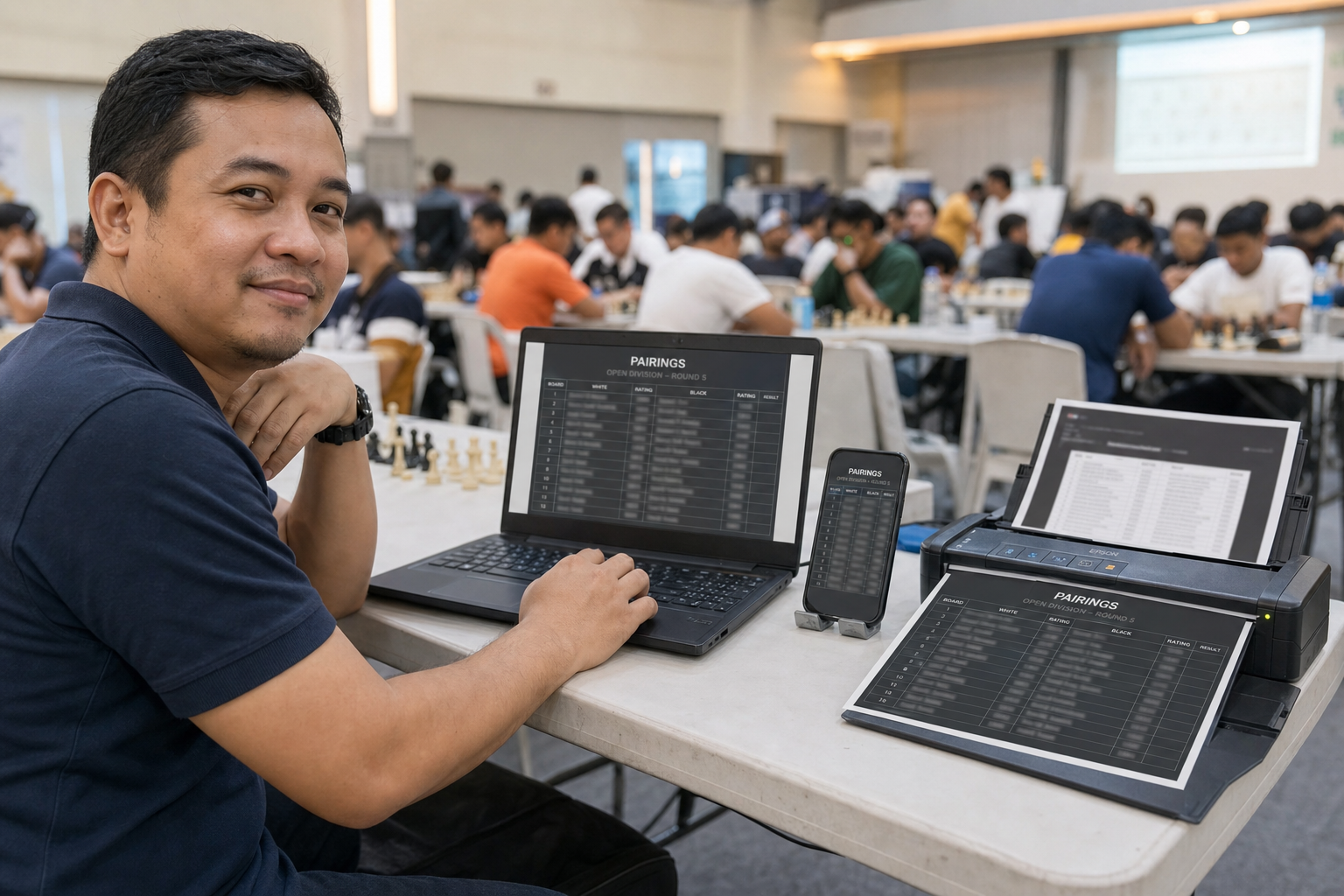
This is a large part of why SwissMax processes and renders on the organizer PC. Once the official pairing data is in hand, a clean graphic can be produced immediately, then sent on WhatsApp, printed for the wall, or shown on a hall screen through the ordinary route an organizer already uses — an extended display or a simple screen share.
The deliberate choice here is to fit the methods organizers already use rather than ask them to adopt a new one. Your projector, your printer, your WhatsApp group — same file, three destinations, no new habits to learn on tournament morning.
Small design decisions, big seconds
Cropped spreadsheets and long plain lists do work. They also make eyes work overtime. The pairing graphics lean on details that look trivial on a feature list and feel substantial in a crowded aisle:
- Systematic name layout — White and Black separated, so the eye does not swim.
- Board number beside the match — not buried three columns away in tiny type.
- Clear colour contrast — light versus dark sides, so "who has White?" is instant.
- Readable density — pages split so names never shrink into a guessing game.
If a player finds their board one to five seconds faster, that sounds negligible. Across eighty boards, two sections and five rounds, those seconds become calmer starts, fewer clusters of confused people, and more of the experience organizers actually want to give.
Two more things that save minutes
Refresh & Compare. When a round is republished, SwissMax compares the new pairing against the previous one board by board — names, ratings, points, federation, starting number — and shows you the changed boards and the removed ones. The question after a republish is always "what actually changed?", and now it takes a glance rather than a careful re-read of sixty lines.
Per-page export tracking. Pages you have already downloaded turn green, and the ZIP export marks the set as complete — so you know at a glance that the whole round is on the wall. Exported filenames carry a date-and-time prefix, so every version you generate is kept alongside the last one.
Pride still matters
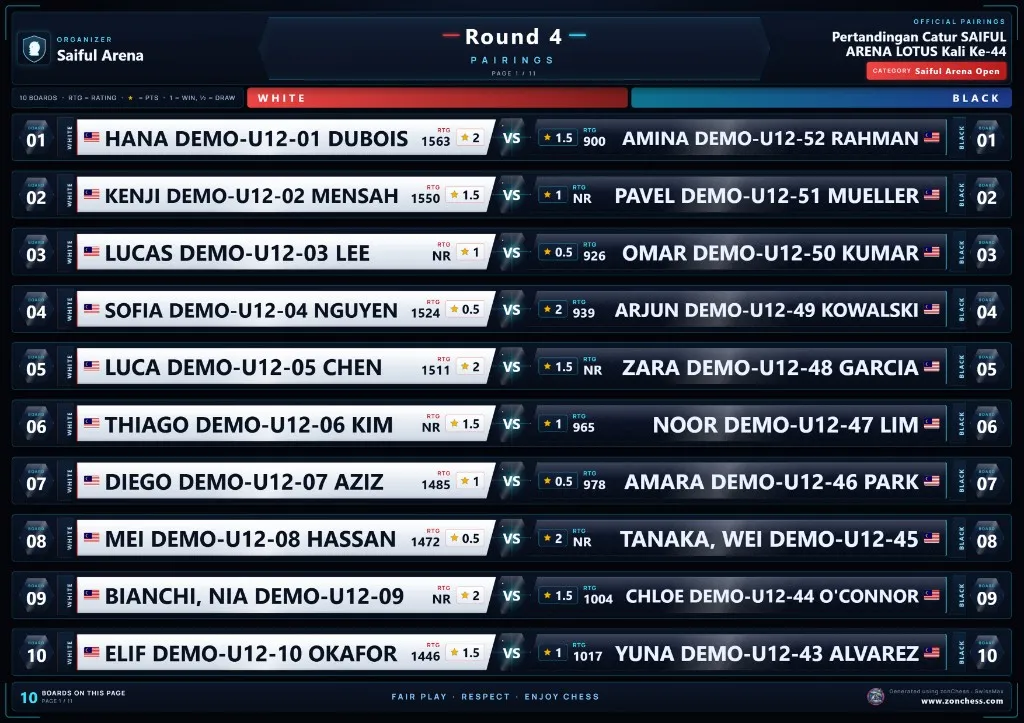
Clear graphics are not only logistics. When a junior sees their name on something that looks a little like a broadcast or a game lobby, they get a small ceremony: I belong here. Parents take a photo. Friends cheer. That feeling is how chess competes with a hundred other weekend options.
So yes, the solution can look small from the outside. Underneath sits a longer thought: protect concentration, respect the official pairing systems, save the minutes that belong to players and organizers, and leave a little more room for joy.