
Watching without hovering: a parent's guide to following OTB chess
Tournament rules often ask parents to stay outside the playing area. That distance can feel hard, especially when a child is young or playing an important round. Technology may one day offer a quiet window — but it must never become a way to hover, coach or weaken the child's independence.
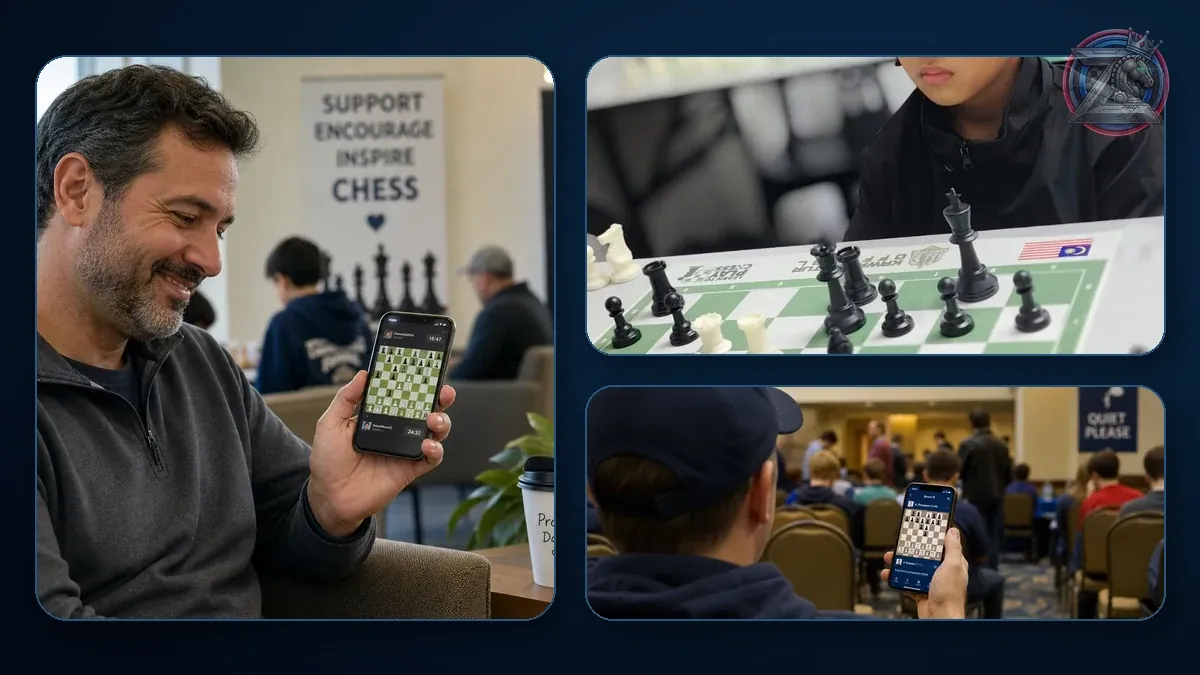
Update — 2 October 2026. Viewer Mode now exists in trial builds. A parent outside the playing hall can follow the live digital board in the ChessZCam Android app, on the same Wi-Fi or hotspot, where the organiser allows it. Each viewer can switch the engine analysis off. It does not work from home or over mobile data. It has been tested on real phones in both set-ups, and it runs smoothly. It has not yet been used through a full tournament day. The points and the article below were written earlier and still call it planned. See how Viewer Mode works.
Update — 24 September 2026. We wrote this article in July, when ChessZCam was only a few weeks into real tournament testing. The advice for parents still stands. Some product details have changed, so here is where things are now:
- The waiting-area viewer is not available yet. Following a board from another device on the hall network is designed, but it is planned as a later extra that is opt-in and off by default. A live tournament broadcast should never depend on anything outside the hall. See the roadmap.
- What exists today. ChessZCam now has six operations on an Android phone, plus ChessZCam Studio for Windows. Broadcast Live sends the board state (not video) over the local network to ChessZCam Live for vMix & OBS, run by the organiser's broadcast operator. So today a family can follow a board live only when the organiser broadcasts it.
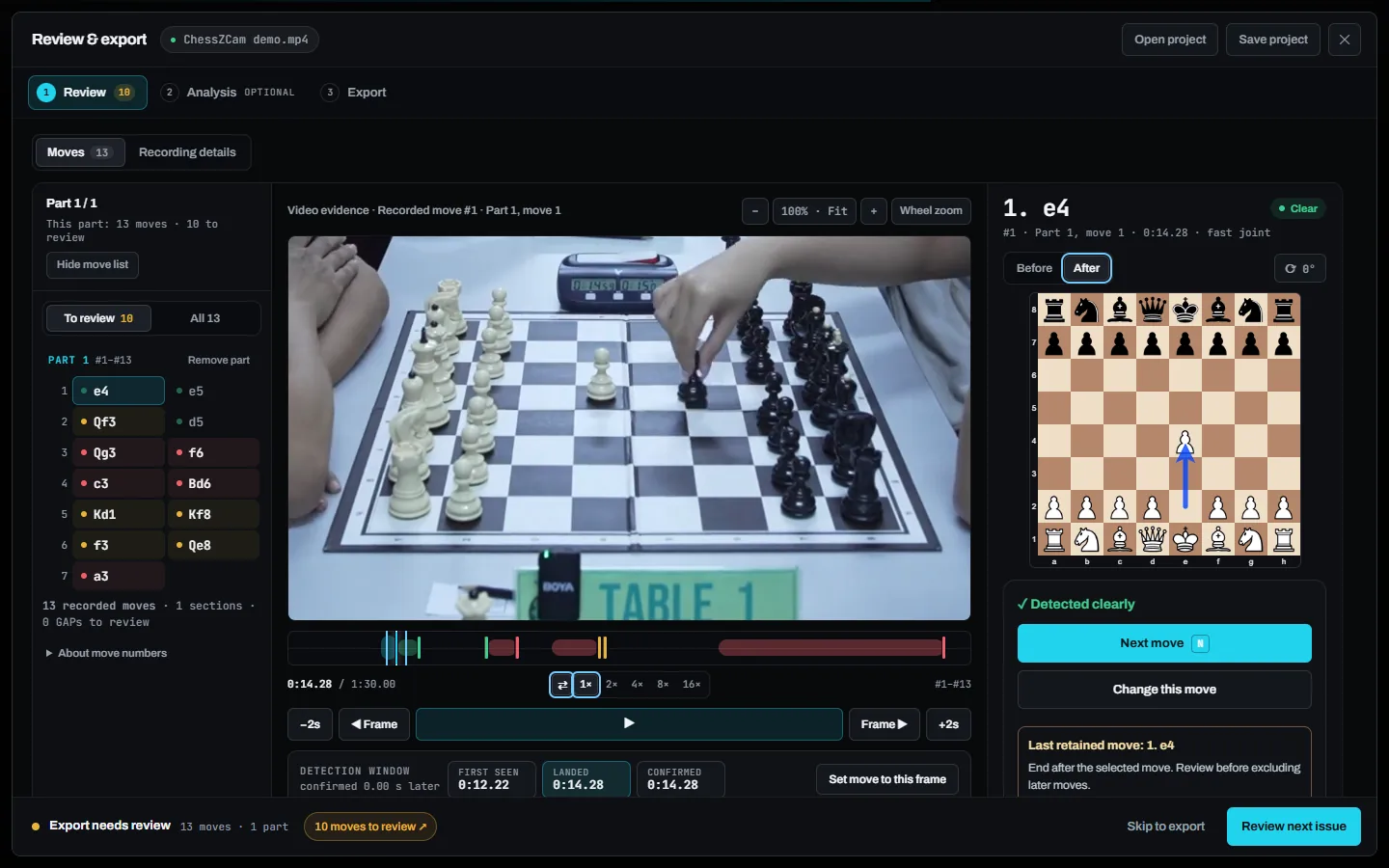
- Where it helps most. For most families the value comes after the round: Record Game Video or Analyze Video, review and repair each move against the video, then add Stockfish analysis if you want it. The analysis is optional, so you can leave it for when the child is ready.
- What has not changed. ChessZCam is not an adjudication device. Its accuracy depends on the setup and the video quality, and anything that happens at the board is for the arbiter to decide. Studio comes first with a free 14-day trial; package prices are on the ChessZCam page, and waitlist members get 50% off their first package. Trial invitations go to the waitlist first.
You care deeply, but the board belongs to the player
A child enters the hall carrying preparation, nerves and hope. The parent waits outside with almost no information. Is the opening going well? Is the clock low? Has the game already ended?
The urge to know is natural, but the separation also has a purpose. The child must make decisions alone, manage emotions and learn that support does not always mean stepping in.
A useful viewing system should reduce unnecessary anxiety without taking ownership of the game away from the child.
A private digital window on the same local network
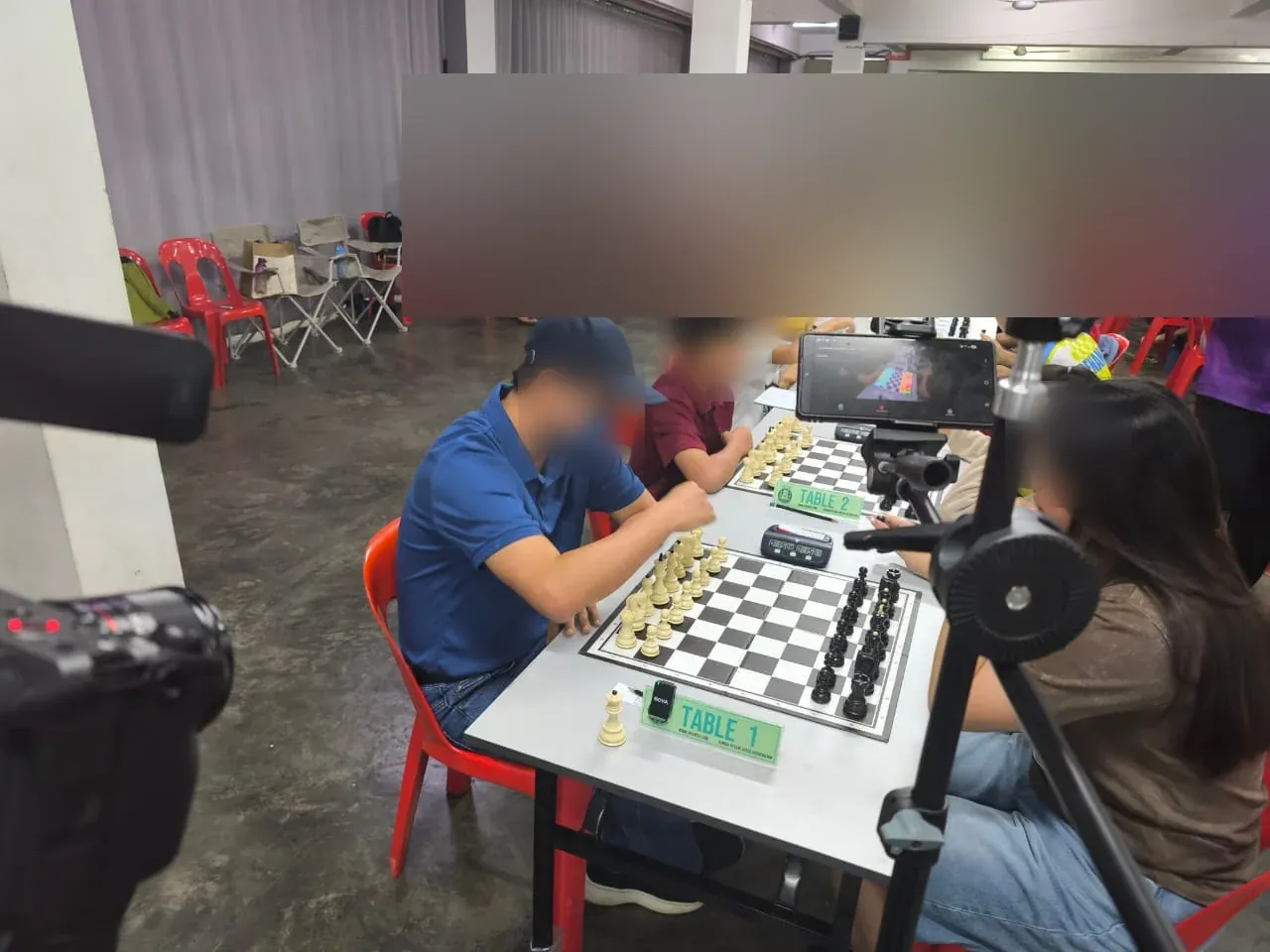
ChessZCam uses a phone to watch the physical board and keep a digital position. The idea in this article goes one step further. Where the organiser allows it, a second device on the same local network could show that position in the waiting area.
That is very different from standing beside the table or pointing a second camera at the players. The parent would see the game state while the playing floor stays quiet.
It would also be optional. Event rules, privacy, fair-play policies and the organiser's approval always come first. As of September 2026 this viewer is planned, not released. Today, ChessZCam sends a live position only to the organiser's own broadcast console.
Watching must never become coaching
- Do not send suggestions, gestures or coded messages during the round.
- Do not use engine analysis to influence a game in progress.
- Do not approach the board because the digital position looks wrong.
- Report technical issues only to the organiser or the assigned operator.
- Accept a delayed or disabled view when the event needs stronger safeguards.
The technology must be designed around tournament integrity, not just around what is technically possible. That is why the planned viewer is opt-in and off by default, and why the organiser decides.
Observe the journey — not only the evaluation
A live position can help a parent understand why a round is taking so long, or prepare emotionally for the conversation afterwards. It should not turn the waiting area into an engine room where adults judge every move.
Some useful things to notice:
Time management
Did the child rush, or spend too long on one decision?
Emotional recovery
Did the child keep fighting after a mistake?
Opening comfort
Did the position become unfamiliar early?
Practical habits
Was the king safe? Were checks, captures and threats considered?
These are starting points for gentle reflection, not ammunition for a lecture at the hall door.
Ask about the child before asking about the move
The most important question after the game may not be "Why did you play that?" A child who has just lost may first need water, food, quiet, or a reminder that one result does not define the day.
Try: "How did the game feel from your side?"
Then: "Was there one moment you would like us to look at later?"
Avoid: giving an engine verdict before the child has had time to take in the game.
The digital record is most valuable once emotions settle, when parent, child or coach can look at it with curiosity.
Not every event should expose every board
Junior tournaments need particular care. An organiser may choose a private local view (where a system offers one), a delayed public broadcast, selected boards only, or no live access at all.
A responsible setup should make clear:
- who can view the game, and whether a link may be shared;
- whether player names, ages or images are shown;
- how long recordings and PGNs are kept;
- who can correct or export the game record;
- how fair-play concerns are handled.
ChessZCam runs detection on the device and does not upload videos or games; no account is needed. What happens to a recording after that is up to the people who hold it, which is why these questions need answers before the round starts.
ChessZCam is being built by a parent who has waited outside too
This use case is not an abstract marketing scenario. It comes from knowing the long hours around tournament halls: the excitement, the uncertainty, the tiredness and the small conversations between rounds.
ChessZCam is built by one independent developer and chess parent at Motivace Studio in Malaysia, with no company or sponsor behind it. It has been tested at four Malaysian tournaments between July and September 2026, and each test is written up in the project journey and the field-test notes.
The aim is not to remove the tournament-day experience. It is to make that experience a little easier to understand, while keeping the child's chance to become independent at the board.
What would make tournament days healthier for families?
Would a private live board reduce anxiety, or would you prefer a delayed replay? What privacy controls would you expect? How can organisers keep parents informed without putting pressure on young players?
Share the practices that have helped your family, in the comments below or through the feedback page. The waiting-area viewer is still ahead of us, so your answers can still shape it. We want it to support children, not turn every move into a public performance.
Related reading
ChessZCam for junior chess families
What ChessZCam can do for a chess family today, and what it cannot do.
Read →The story behind ChessZCam
Why a chess parent started building a phone-camera tool.
Read →Livestream a tournament on a budget
An organiser's checklist for streaming a chess event.
Read →The honest ChessZCam beta promise
What we promise testers, and what we will not claim.
Read →
Join the conversation
Share a tournament-day practice that helped your child, or a privacy and fair-play safeguard you believe every viewing system should include. Comments are moderated before they appear.